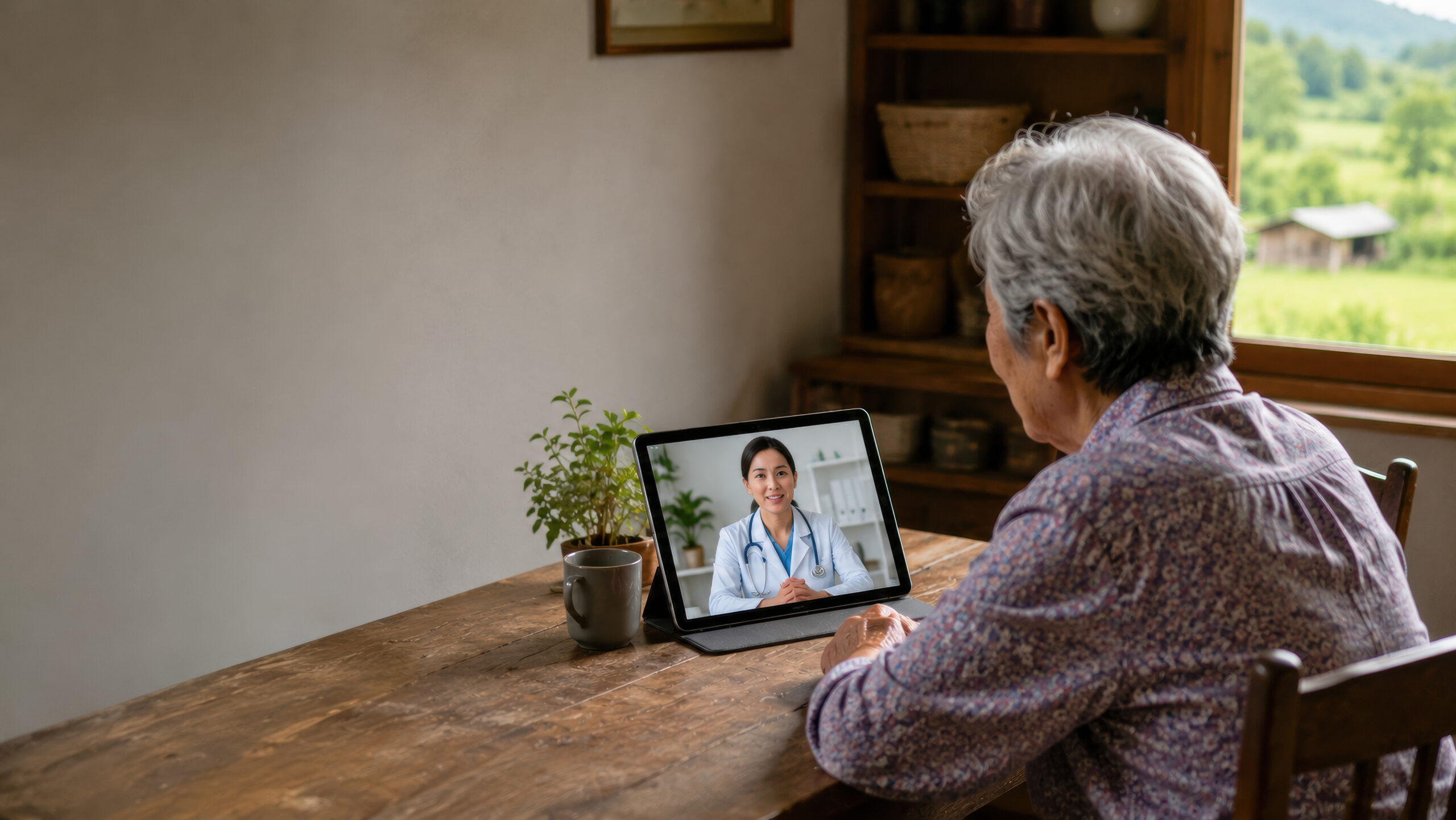
Telehealth enhances home-based care by enabling patients to consult with healthcare providers remotely, improving access, reducing costs, and supporting continuous monitoring, all without leaving home.
Telehealth significantly enhances home-based care by connecting patients with healthcare providers through digital tools like video calls, remote monitoring devices, and secure messaging platforms. According to the American Hospital Association, telehealth use increased 63-fold during the COVID-19 pandemic, accelerating its role in home care. The result is a more accessible, efficient, and patient-centered approach to health management.
How Does Telehealth Improve Access to Care for Home-Based Patients?
Telehealth removes geographic and mobility barriers that often prevent home-based patients from receiving timely care.
- Patients in rural or underserved areas can consult specialists without long-distance travel.
- Elderly or mobility-limited individuals can attend appointments from home.
- Appointments can be scheduled more flexibly, reducing wait times.
If you’re the primary family caregiver for an elderly loved one, 24-hour home care for Reston seniors is available around the clock if your loved one’s health has become too difficult to manage without professional expertise. At Assisting Hands Home Care, we take measures to help seniors prevent illness and injury by assisting with exercise and mobility, preparing nutritious meals, helping with bathing and other personal hygiene tasks, and much more.
How Does Telehealth Support Remote Patient Monitoring?
Remote patient monitoring (RPM) allows providers to track a patient’s health data in real time using connected devices.
- Wearables and sensors measure vital signs like heart rate, blood pressure, and oxygen levels.
- Data is transmitted directly to care teams, enabling faster responses to changes in a patient’s condition.
- According to the Centers for Disease Control and Prevention (CDC), RPM has shown strong results in managing chronic conditions such as diabetes and hypertension.
How Does Telehealth Reduce the Cost of Home-Based Care?
Telehealth reduces financial burdens for both patients and healthcare systems.
- Virtual visits eliminate transportation costs and reduce the need for in-person infrastructure.
- Early intervention through remote monitoring can prevent costly emergency room visits or hospitalizations.
- A 2021 study published in the Journal of Telemedicine and Telecare found that RPM programs reduced hospital readmissions by up to 50 percent for high-risk patients.
How Does Telehealth Enhance Communication between Patients and Care Teams?
Consistent, clear communication is central to effective home-based care, and telehealth strengthens this connection.
- Secure messaging platforms allow patients to ask questions and receive guidance between appointments.
- Video consultations enable care teams to visually assess a patient’s condition and environment.
- Family members or caregivers can be included in virtual appointments, expanding coordinated care.
For some families, caring for a senior loved one can be overwhelming at times. Luckily, Reston families can rely on exceptional respite and overnight home care provided by the experienced professionals from Assisting Hands Home Care. We are a trusted name in respite and hourly care, and our caregivers are available around the clock to assist seniors with bathing, transportation, medication reminders, exercise, and much more, allowing families the time they need to focus on other important responsibilities or just take a break.
What Are the Key Challenges of Implementing Telehealth for Home-Based Care?
Despite its benefits, telehealth comes with implementation challenges that must be addressed.
- Technology access – Patients without reliable internet or devices may face barriers to participation.
- Digital literacy – Older adults may need support navigating telehealth platforms.
- Data privacy – Providers must ensure platforms comply with HIPAA regulations to protect patient information.
- Reimbursement policies – Telehealth coverage varies by insurer, which can limit access for some patients.
One of the most challenging tasks of helping an elderly relative age in place safely and comfortably is researching agencies that provide home care. Families can turn to Assisting Hands Home Care for reliable, high-quality Reston homecare for aging adults. We offer 24-hour care for seniors who require extensive assistance, and we also offer respite care for family caregivers who need a break from their caregiving duties. Schedule a free in-home consultation by giving us a call today.
Frequently Asked Questions
What types of home-based patients benefit most from telehealth?
+
Those managing chronic conditions, recovering from surgery, or requiring ongoing monitoring tend to benefit most, as telehealth enables consistent oversight without frequent clinic visits.
Is telehealth covered by insurance for home-based care?
+
Coverage varies by insurer and location, but Medicare, Medicaid, and many private insurers expanded telehealth coverage following the COVID-19 pandemic, though policies continue to evolve.
What technology do patients need to use telehealth at home?
+
Most telehealth services require a smartphone, tablet, or computer with a camera and a stable internet connection along with access to the provider’s chosen platform.
How secure is telehealth for sharing personal health information?
+
Reputable telehealth platforms use encryption and comply with HIPAA regulations to protect patient data, though patients should always verify their providers’ security practices.
Can telehealth fully replace in-person home care visits?
+
Telehealth complements but does not fully replace in-person care, particularly for tasks requiring physical examination or hands-on procedures.